The Mountain Where the Ordinary Burns Holy: Finding God on the Backside of the Desert

Scripture:
Now Moses was tending the flock of Jethro his father-in-law, the priest of Midian, and he led the flock to the far side of the wilderness and came to Horeb, the mountain of God. There the angel of the LORD appeared to him in flames of fire from within a bush. Moses saw that though the bush was on fire it did not burn up.
— Exodus 3:1-2 (NIV)
Devotional: The Power of the Unexpected Trail
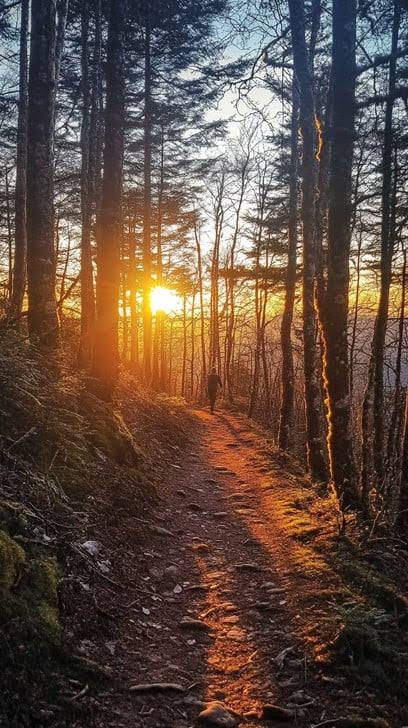
If you spend any time hiking or camping, you know the power of the remote. You intentionally leave the noise and distraction of the city behind for the quiet of the wild, seeking space to hear and see clearly. This is the exact setting where God chose to reveal Himself to Moses.
Moses was not in a palace or a temple; he was doing his job, leading his flock to the "far side of the wilderness" on Mount Horeb. After decades as a fugitive, he was deep in obscurity. This shows us a profound truth: God’s calling often comes when we feel least prominent and most isolated. The wilderness is a crucible—a place where God uses isolation and our accumulated experience to prepare us to live into our future calling.
A bush burning in the hot desert may not have been an unusual sight, but one that was burning without being consumed was a "great sight". The turning point was Moses's simple decision: he "turned aside to look".
In our own journeys—whether physical or spiritual—it is easy to be so focused on moving the flock or checking the "next trail marker" that we miss the miraculous right beside the path. Like Moses, we are called to stop, look, and listen to God's voice, deliberately stepping away from the daily routines and distractions that clamor for our attention.
When Moses approached the burning bush, God issued an immediate command: “Do not come any closer... Take your sandals off your feet, for the place where you are standing is holy ground”.
This patch of ground was not holy due to its location; it was holy because God’s presence was there in that moment. The act of removing sandals is an act of reverence and obedience, a way of intentionally removing the distractions of daily life (the "sandals of routine") to bow in awe before a holy God.
When you stop on a mountain summit, by a quiet stream, or around a campfire, you are in a space where God can make the ordinary sacred simply by His presence.
When God finally gave Moses the monumental task of going to Pharaoh to free the Israelites, Moses asked the ultimate question: Who am I to do this?
God did not answer by listing Moses's credentials. Instead, He provided the key to success for all impossible adventures: “I will be with you”. And when Moses pressed for a name, God revealed Himself as I AM WHO I AM. This name is a rock-solid assurance that the One who is Personal, Powerful, and always Present is the One sending you.
For the path ahead, whether it's a difficult hike or a challenge at home, remember this fundamental truth: the success of your mission flows not from your own strength or ability, but from the unwavering presence of the I AM.
Trail Application: Defining Your Holy Ground
God takes His people camping to establish them as a people of worship and trust.Citation 1
Remove Distractions: Identify one major distraction that keeps you from hearing God's voice (a "sandal" you need to remove). This week, dedicate a specific time to put that distraction aside and deliberately "turn aside to look" for God's presence.Citation 5
Acknowledge the Holy: Next time you are outdoors, pause and declare the ground you are standing on as holy, not because of the nature around you, but because the I AM is with you. Let reverence be your first step before any mission.


Comments